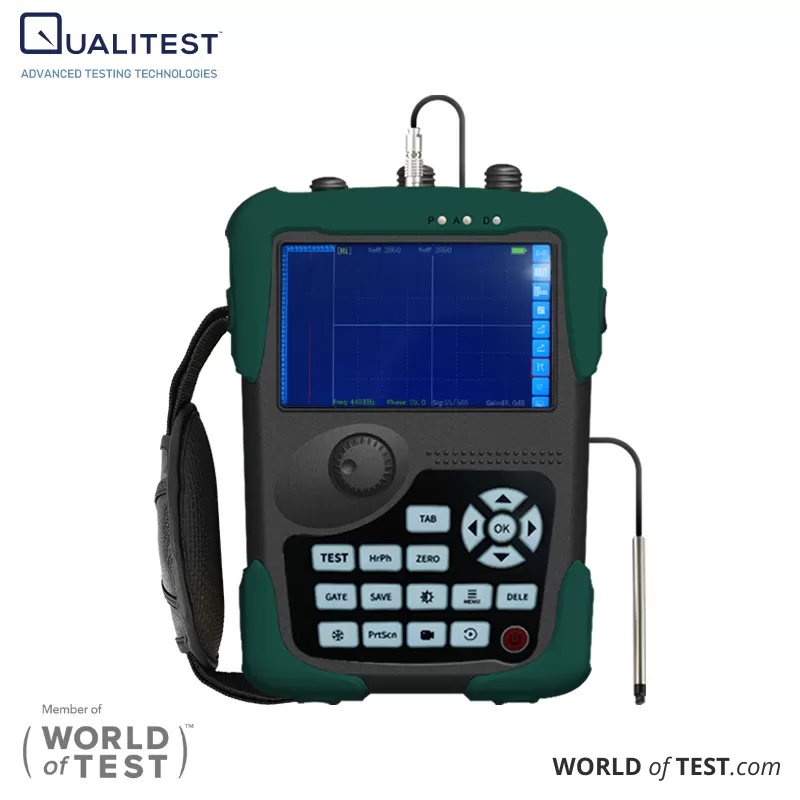
Eddy Current Flaw Detector - QualiECFD-Series
Eddy Current Flaw Detectors are advanced non-destructive testing (NDT) instruments used to detect surface and near-surface defects in conductive materials. These detectors work on the principle of electromagnetic induction, making them ideal for inspecting metals without damaging the component.
How Do Eddy Current Flaw Detectors Work?
An alternating current is passed through a coil, generating an oscillating magnetic field. When this coil is brought near a conductive material, eddy currents are induced in the material. Defects such as cracks, corrosion, or voids disrupt these currents, which alters the impedance of the coil. This change is detected and analyzed to identify flaws in the material.
Key Features of Eddy Current Flaw Detectors
- High sensitivity to small cracks
- Portable and easy to use on-site
- Suitable for complex geometries
- Instantaneous results
- Can detect flaws beneath paint or coatings
Applications of Eddy Current Flaw Detectors
Eddy Current Testing (ECT) is widely used in various industries for its precision and speed. Common applications include:
1. Aerospace Industry
- Detection of cracks in aircraft fuselage, turbine blades, and landing gear components
- Inspection of fastener holes and welds
2. Automotive Industry
- Surface crack detection in engine components, brake systems, and suspension parts
- Heat treatment verification and material sorting
3. Power Generation
- Inspection of steam generator tubes in nuclear and thermal power plants
- Monitoring of turbine components and condenser tubes
4. Manufacturing & Fabrication
- Quality control during metal fabrication
- Detection of surface and sub-surface flaws in aluminum, steel, copper, and other metals
5. Oil & Gas Sector
- Pipeline inspection for corrosion, pitting, and cracking
- Tank wall and pressure vessel evaluation
6. Railways
- Axle and wheel inspection
- Rail track crack detection
Benefits of Using Eddy Current Flaw Detectors
- Non-contact and non-destructive method
- High-speed inspections with real-time feedback
- Effective on painted, coated, or dirty surfaces
- Minimal surface preparation required
- Can be integrated with automation systems
Eddy Current Flaw Detectors play a vital role in ensuring the safety, reliability, and integrity of metal components across multiple industries. Their ability to detect minute defects without harming the test object makes them an indispensable tool in quality assurance and preventive maintenance.




 English
Comment